Microscope Root Canal Treatment in Amman
Root canal treatment is Dr. Hiba's specialty. The goal is simple: keep your natural tooth in place, pain-free, for years.
What is microscope root canal treatment?
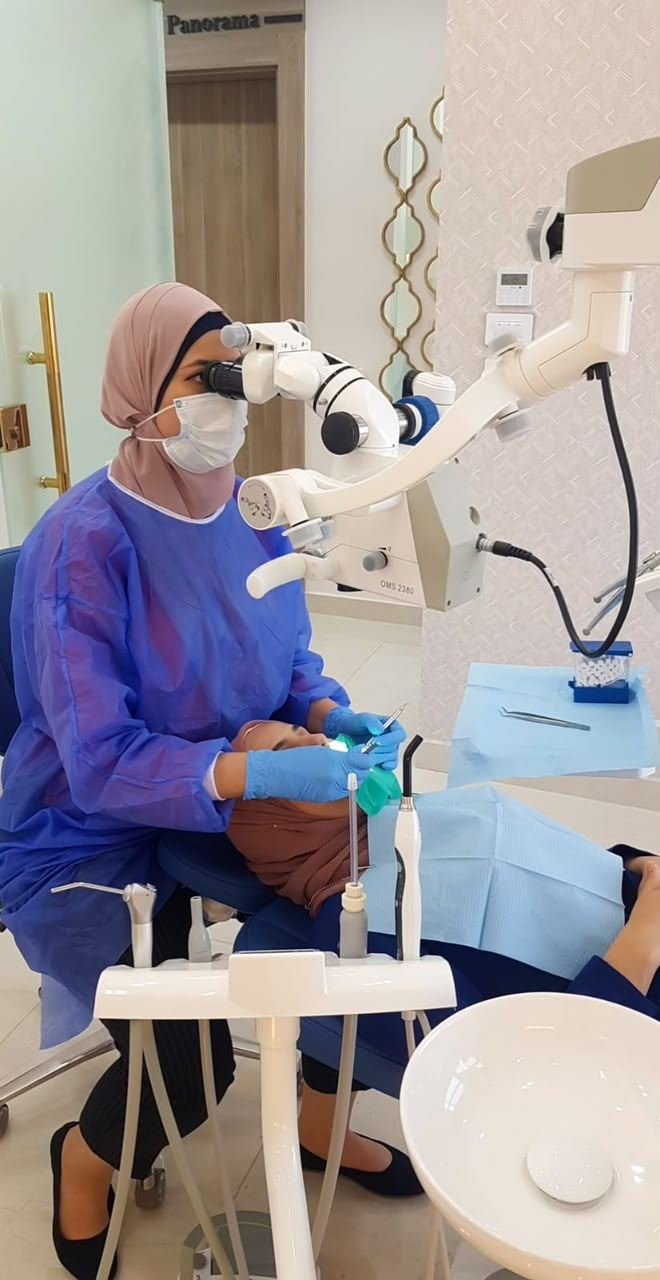
A root canal saves a tooth from extraction when the nerve inside it becomes inflamed or dies. At Dr. Hiba's clinic every root canal is done under a surgical microscope, with an in-clinic X-ray to map the canals and check the result. The service also covers retreating teeth that were treated before and haven't settled.
When might you need microscope root canal treatment?
- Pain that wakes you at night
- Sensitivity that lingers after hot or cold
- Pain when biting or chewing
- Swelling or a bump on the gum
- A tooth that has turned darker
- An old root canal that still hurts
What does the service include?
- First-time root canal treatment
- Retreatment of an earlier root canal that hasn't settled
- Treating inflamed or abscessed teeth
- X-rays taken in the clinic
- Second opinions on complex cases
How is microscope root canal treatment done, step by step?
- The tooth is fully numbed, then isolated with a rubber dam so it stays clean and dry.
- A small opening is made in the top of the tooth and the canals are located under the microscope.
- The canals are cleaned, shaped and disinfected.
- The canals are filled and sealed, then the tooth is closed with a filling.
Why the microscope?
Some teeth have an extra canal that is easy to miss, especially upper molars. Magnification helps find it, spot fine cracks and keep as much of the tooth as possible.
Can a tooth that already had a root canal be treated again?
Yes, in many cases. If pain returns or an infection shows on the X-ray, the canals can be reopened, cleaned and sealed again instead of removing the tooth. This is decided after an exam and X-ray.
Can a tooth with an abscess be saved?
In many cases, yes. A root canal cleans out the infected canals causing the abscess, removing the source of infection while keeping the tooth. This is decided after an exam and X-ray.
How long does a tooth last after a root canal?
A well-treated tooth protected by a sealed filling or crown can last for many years like your other teeth, with daily care and regular check-ups.
After treatment: care tips
- The tooth may be tender on biting for a few days, easing gradually.
- Take the painkiller the doctor recommends, as directed.
- Avoid heavy chewing on the tooth until the final filling or crown is fitted.
- Keep brushing and flossing as usual.
- Call the clinic if swelling appears or the pain gets worse after day three.
Common questions about microscope root canal treatment
Does a root canal hurt?
The tooth is fully numbed, so most patients feel pressure rather than pain. The tooth may be tender for a few days afterwards, which usually settles with ordinary painkillers.
How many visits does a root canal take?
Most cases need one or two visits. Badly infected teeth or teeth treated before may need more. You will know after the first examination.
Do I need a crown after a root canal?
Back teeth usually do, because they take the chewing force and are more likely to crack after treatment. Front teeth may only need a filling.
Do I need antibiotics before a root canal?
Usually not. The main treatment is cleaning the infected canals. The doctor decides whether antibiotics are needed in certain cases, such as spreading swelling.
Related articles
What is a root canal, and when do you need one?
What a root canal is, the signs you need one, the steps of treatment and why a microscope is used. Clear answers from an endodontist in Amman.
Read articleDoes a root canal hurt?
Does a root canal hurt? What you feel during and after treatment, and why the pain usually comes before treatment, not during it.
Read articlePain after a root canal: what's normal and when to call
Is pain after a root canal normal? How long it lasts, what helps, and the signs that mean you should call the clinic or go to the emergency department.
Read articleReady to book?
Message the clinic on WhatsApp or call, and we'll confirm a time that suits you.